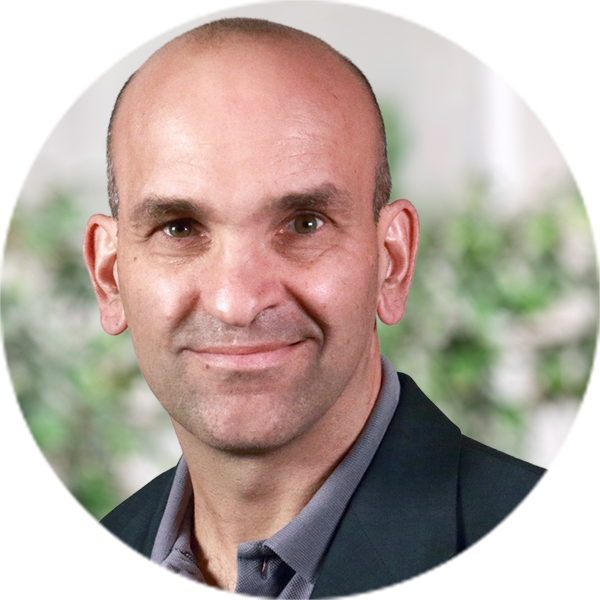
Instructor: Marco del Negro (Federal Reserve Bank of New York)
Dates: 31 August - 4 September 2026
Hours: 9:30 to 13:00 CEST
Format: In person
Practical Classes
There will be some voluntary sessions in the afternoon (from 15:00 to 17:00) led by a teaching assistant. Exact dates will be announced before the beginning of the course.
Intended for
Practitioners, researchers, and academics interested in time-series methods, business cycle analysis, and forecasting.
Prerequisites
A good background in statistics and econometrics will be useful to follow the class, but no familiarity with the Bayesian approach is required, as the course will start with a brief introduction to Bayesian econometrics.
Overview
The course will offer an overview of modern tools in macroeconometrics, ranging from VARs, state-space models (such as time-varying coefficients models, factor models and models with stochastic volatility), dynamic stochastic general equilibrium (DSGE) and DSGE-VARs models, pools, and model averaging. The course will strive to offer enough theory to understand the tools' theoretical underpinnings, why they work, how and when they should be used, and what their limitations are. At the same time, it will emphasize their practical use in macro applications. The course will take a Bayesian perspective, both because this approach has shown itself to be useful in applied macroeconomics and because of its computational advantages relative to the frequentist approach. Monte Carlo methods, which lie behind the recent surge in popularity of the Bayesian approach, will be reviewed.
Topics
- Introduction to Bayesian inference
- VARs
- State-space models and filtering
- An overview of Markov Chain Monte Carlo (MCMC) and Sequential Monte Carlo (SMC) methods
- Time-varying parameter and stochastic volatility models
- DSGEs and DSGE-VARs
- Forecasting with DSGE models
- Policy analysis with misspecified DSGE models
- Model averaging/combination

- Professor: Marco Del Negro